.jpg)
26 Aug 2026
doorOneThird
Ask any grower, packer or retailer what makes a strawberry or a bunch of grapes taste good, and sugar content comes up fast. The number behind that sweetness is Brix, and it has shaped how fresh produce is graded, priced, and sold for well over a century.
What is Brix exactly?
Brix (written as °Brix) is a measure of the soluble solids dissolved in a fruit's juice, expressed as grams of solids per 100 grams of liquid. In practice, that's mostly sugar, along with small amounts of acids, pectins, and amino acids. A fruit with a reading of 12°Brix contains roughly 12 grams of soluble solids per 100 grams of juice.
The scale dates back to the 1800s and was developed by German scientist Adolf Brix as a way to standardize sugar measurement. It's a simple way to test sugar content, and it's still the industry default nearly two centuries later.
Why Brix matters for growers, distributors, and retailers
Brix is one of the clearest signals of eating quality available before a consumer takes a bite. It reflects variety, growing conditions, maturity at harvest and how the fruit was stored, which makes it useful at almost every stage of the supply chain.
Growers use it to decide when a crop is ready to pick. Packhouses use it to sort and grade lots. Distributors and retailers use it as a quality benchmark that ties back to consumer satisfaction and, ultimately, repeat purchases. A batch that consistently hits its target Brix range is a batch that's less likely to come back as a complaint.
It's worth being precise here: Brix measures sweetness, not overall flavor or nutritional value. Acids, aromatics, and texture all play a role in how a fruit actually tastes, so Brix works best alongside those other quality checks rather than as a stand-alone score.
Which fruits are measured in Brix
Brix is used widely across fresh produce, including strawberries, blueberries, grapes, melons, citrus, apples, and tomatoes. For strawberries, Brix is a core ripeness and taste indicator, often reported alongside visual checks for dry or wet spots on the fruit. For blueberries, Brix is one of the main metrics used to judge harvest timing and batch consistency.
How Brix is measured today
There are two broad approaches in use across the industry. Other methods exist too, hydrometers for liquid samples, lab chromatography for precise sugar breakdowns, inline sensors built for beverage processing, but none of them see practical use for grading fresh produce. In the field, refractometers and NIR are the two methods generally used.
The traditional method uses a refractometer, either a handheld analog unit or a digital tabletop version. Both require juice to be extracted from the fruit, either by cutting and squeezing a sample or crushing it, then placing it on the instrument's prism to get a reading. It's an accurate, well-understood method, but it's slow and destructive: the tested fruit is gone, sampling is typically limited to a handful of pieces per lot, and results depend partly on how carefully the operator extracts the juice.
Another approach uses near-infrared (NIR) spectroscopy to assess Brix without cutting into the fruit at all. A sensor scans the intact fruit and, based on how light interacts with its internal structure, predicts the soluble solids content in seconds. This is where non-destructive scanning technology is changing what's possible for quality control. Instead of destroying a small sample and hoping it represents the whole lot, teams can scan far more fruit, faster, and keep every piece they test.
The bottom line
Understanding what Brix does is the first step to using it well. Brix has earned its place as a fresh produce standard because it's a reliable proxy for sweetness. The methods used to assess it are what's evolving. Where the traditional method, a refractometer, is more time-consuming and destructive, opposite to NIR technology.
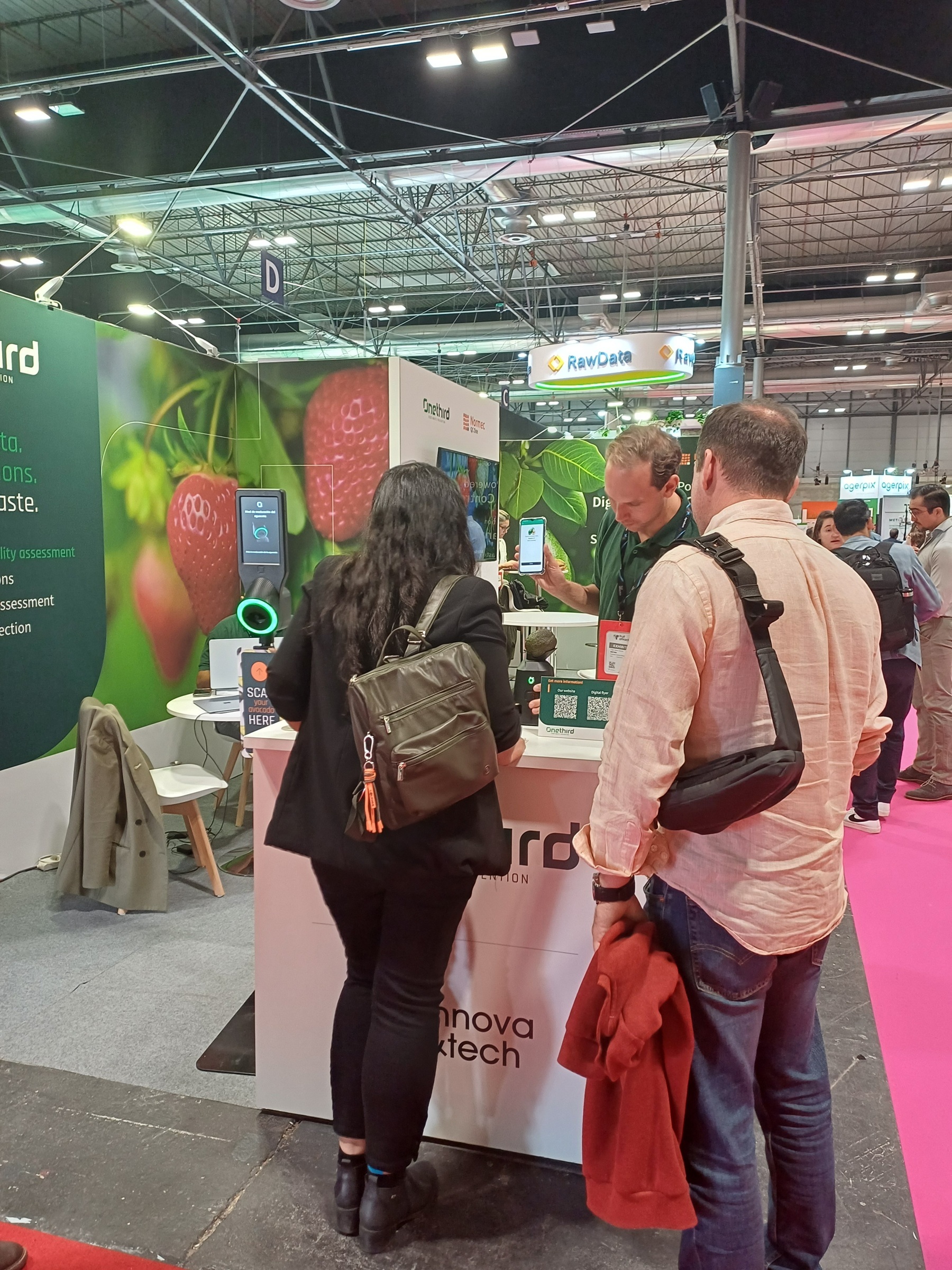
Curious what objective Brix data could do for your QC process? Get in touch, we'd love to show you.
.jpeg)